
A Seasonal Checklist for Winter Nature Journaling in the UK
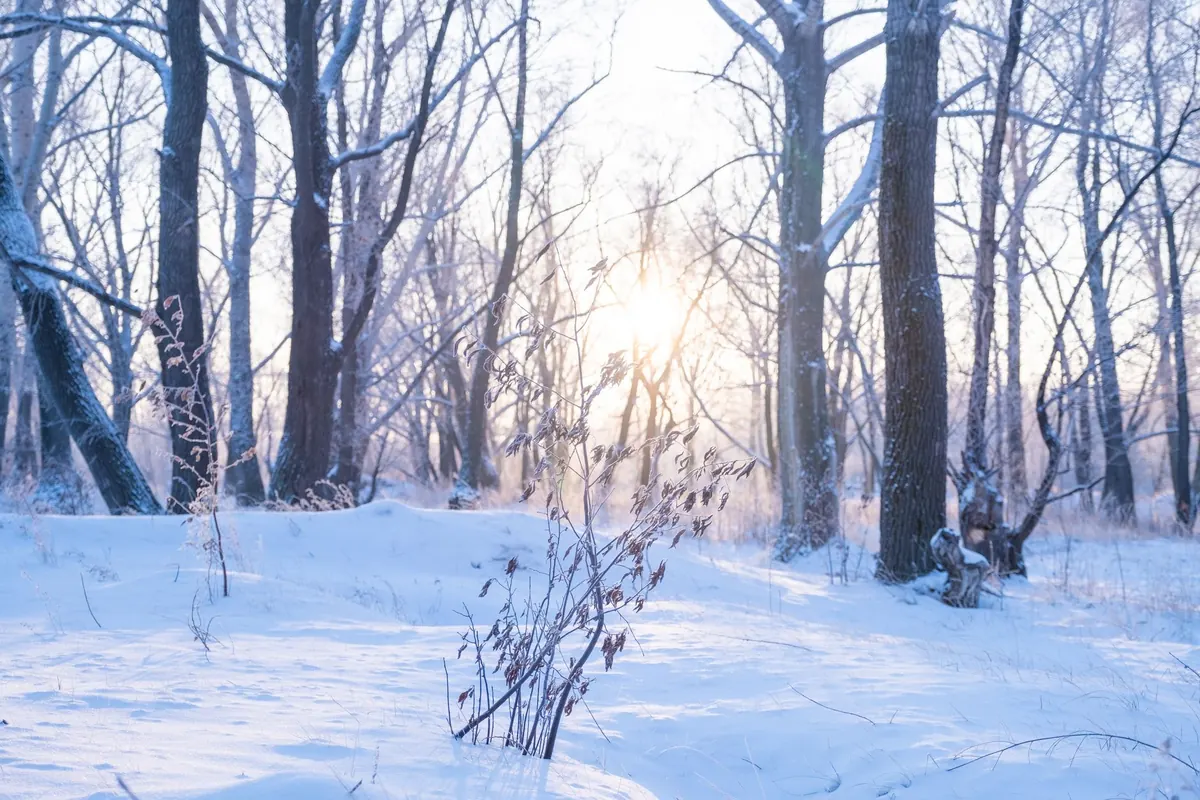
Winter has a reputation as the quiet season, and anyone who has stood in a bare field in a grey January drizzle knows exactly why. But the emptiness is mostly a trick of the light. Once the leaves are gone, the wood shows you its architecture, and the birds that stay — or arrive — gather into noisy, obvious flocks. Winter rewards a journal more than any other season, because there is less to see and therefore far more to notice.
December: Flocks, Berries and the First Hard Frosts
Start with the flocks, because they are the easiest thing to find and the hardest to count properly. Mixed tit flocks move through hedgerows and woodland edges like a slow tide: blue tits and great tits calling constantly, long-tailed tits fussing behind them, and somewhere in the middle a goldcrest or a treecreeper working the trunks. Stand still for two minutes and they will pass around you rather than away from you.
Try recording them like this:
- Note the time, temperature and whether the sun is out.
- Count in blocks — ten blue tits, six long-tailed, two great tits — rather than trying for an exact total.
- Write down which species led the flock and which trailed behind.
December is also the month of berries, and of the birds that come for them. Redwings and fieldfares arrive from Scandinavia; listen for the thin tseep of redwings overhead after dark, and the harsh chacking of fieldfares in hawthorn hedges. In some winters, when the berry crop fails further north and east, waxwings turn up on rowan and cotoneaster in supermarket car parks and suburban streets. If you find a berry bush, record roughly how full it is, then revisit and note how many days it takes to be stripped.
Two other things worth logging this month: the first properly hard frost, with the date and where you saw it, and the tawny owl calls after dusk. Robins sing through much of the winter too, so note that as well — it is a useful thing to compare with spring.
January: Tracks, Traces and the Quietest Weeks
After rain, snow or a run of frost, the ground becomes a notebook that other creatures have already written in. Go out early, when the sun is low and rakes across the mud at a shallow angle; that side-light is what makes a footprint visible.
What to look for
Gateways, bridleway puddles, muddy field margins and the edges of ditches are the best places. Fox prints are narrow and oval, often in a neat straight line, with claw marks usually visible. Badger prints are broader, with five toes and a wide pad. Deer leave two clean slots — small and dainty for roe, larger for fallow or red — and grey squirrels bounce, leaving paired prints. Otter tracks along a river bank, or a spraint on a flat stone under a bridge, are a genuinely good day's record.
Feeding signs are just as useful. Split nutshells under a hazel, cones stripped to a bare core, holes pecked in apples, owl pellets below a favoured roost, feathers caught on a fence. Photograph each one with something for scale — a coin, a ruler, your boot — and write a sentence about what you think made it. Being wrong is fine. Being wrong in writing is how you learn.
January is also the month for big gatherings: pink-footed geese moving between roost and stubble field at dawn, golden plover and lapwing on wet pasture, and starling murmurations at dusk. Record the direction the birds move, the time, and the weather. Add a note on whether the ground is frozen, because that changes everything about where birds feed.
February: First Songs and the Return of Growth
The light shifts this month. Robins and great tits begin singing in earnest, song thrushes start repeating themselves from a high perch, and the mistle thrush — often the earliest of the lot — sings in wind and rain when nothing else will. Note the first date you hear each one, and where the bird was singing from.
On the ground, growth is quietly starting. Hazel catkins hang like lambs' tails, and if you look closely at the same twigs you will find the tiny crimson female flowers. Alder catkins open along the rivers. Snowdrops, winter aconite and the first lesser celandine appear, and on a mild afternoon a queen bumblebee may be out searching for a nest site. Frogspawn usually arrives late in the month in the milder south-west and later elsewhere, so it is worth recording the date and the exact spot. Rooks are back at their nests, and herons are busy at heronries — both easy to record from a distance.
Reading Bare Trees
Without leaves, trees become identifiable by their buds, bark and shape. A few to learn well:
- Ash — sooty black buds in opposite pairs, like small hooves.
- Oak — clusters of rounded buds at the twig tips, with tangled, crooked branches.
- Beech — long, slender, coppery-brown buds on smooth grey bark.
- Horse chestnut — large, sticky buds that feel tacky on the fingers.
- Sycamore — fat green buds in opposite pairs.
- Elder — opposite buds tinged with purple, on soft, pithy twigs.
Draw silhouettes rather than details. Ignore twigs and capture the outline: does the crown rise like a poplar or spread like an oak? Note dead limbs, old nests, holes, and how much ivy the trunk carries. Photograph the same tree from the same spot each month and sketch from the photo at home when your fingers have thawed.
What to Carry
- A small hardback notebook and a pencil — ink freezes or smears in the cold.
- A hand lens for buds, galls and bark texture.
- Binoculars, ideally 8x42, and a phone for photographs and timekeeping.
- Thin liner gloves you can write in, plus warmer over-gloves for walking.
- A torch with a red filter for dusk and night recording.
- A flask. Cold hands write badly.
Keep your distance from roosts, murmurations and nesting herons, and put the dog on a lead near livestock and on wetland reserves. River banks and frozen water are the real hazards of winter fieldwork: if the ground looks questionable, note it from the path and move on.
Keeping a Winter Journal That Lasts
A short, regular entry beats a long, occasional one. Aim for twenty minutes on the same walk once a week, and head every page with the date, time, weather, temperature and location. Keep a separate page at the back for "firsts": first hard frost, first redwing, first catkin, first frogspawn. That page becomes the most interesting thing in the notebook within two or three winters, because it lets you compare one year against another.
Not every entry will be dramatic. Some will say little more than cold, grey, one robin singing, nothing else. That is still a record, and it is still yours. Winter journaling is not about finding something extraordinary; it is about being there often enough that the ordinary starts to show its detail.
Photo: Наташа Нирамайя / Pexels