
Watercolour vs. Pencil: Choosing the Best Medium for Nature Journaling
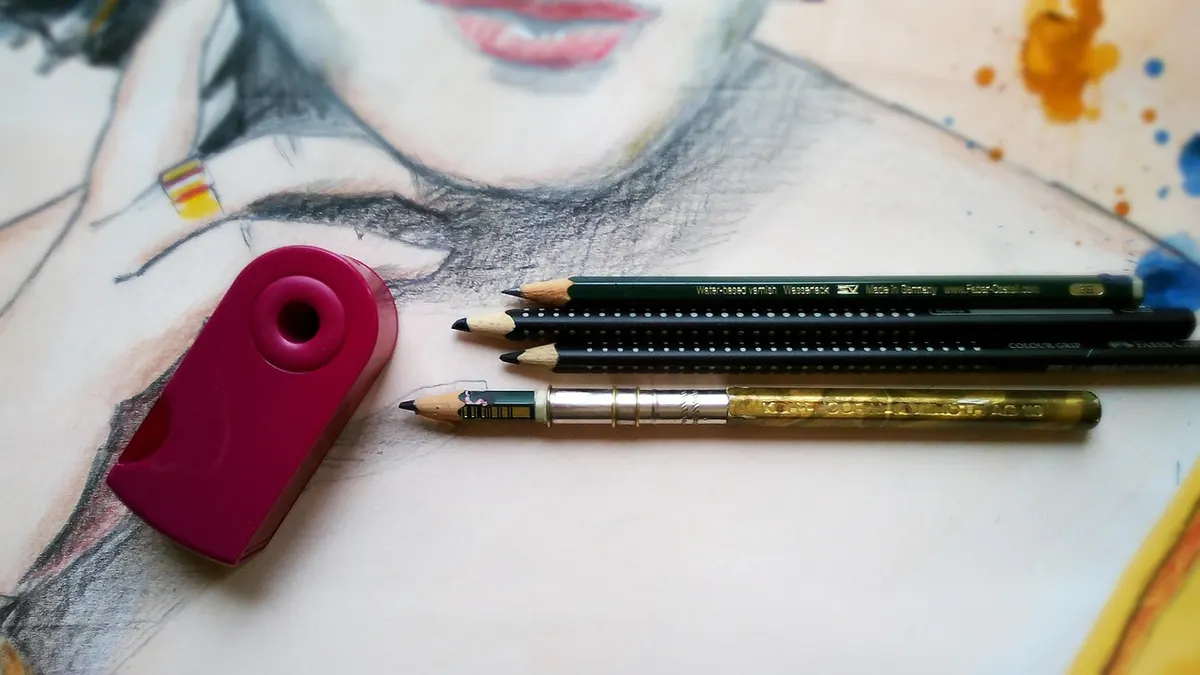
Packing for a morning of field sketching is a series of small decisions, and the biggest is usually this: watercolour or pencil? Both fit in a jacket pocket. Both can produce a page you will still enjoy looking at five years from now. They simply ask different things of you — different amounts of time, different tolerance for weather, different kinds of attention. Knowing which one suits the day saves a surprising amount of frustration.
What Each Medium Does Best
Watercolour records colour, light and atmosphere. Pencil records structure, proportion and tone. That is the short version, and it explains most of the choices you will make outdoors.
If you want to remember what a November hedgerow looked like — the rust of beech, bleached grasses, low sun coming off wet bark — a few loose washes will do more than an hour of careful shading. If you want to understand how a heron folds its neck when it strikes, or how bramble tangles without collapsing, graphite will teach you faster than paint. Colour is a fact about the scene; structure is a fact about the subject. Most pages are stronger once you decide which of the two you are actually after.
Watercolour: Colour That Carries Information
A wash of raw umber is not decoration. It is a record. Paint a fungal cap in the exact dull apricot it wore in damp shade and you have captured something a pencil cannot reach, however finely you shade it.
Where it wins
- One wet wash on damp paper can sum up sky, distance and drizzle in twenty seconds.
- Colour memory: years later you will still know what shade of purple that bud was.
- Loose work reads well. An unfinished watercolour with white paper showing looks deliberate; an unfinished pencil drawing usually looks abandoned.
- Six pigments in a pan set give you an enormous range of mixes.
Field tips for watercolour
- Keep the paper small. A6 or a folded spread dries in minutes and forces you to simplify.
- Carry six pigments, not twenty: a warm and a cool of each primary. You will mix faster and your pages will look coherent.
- Mix a puddle before brush touches paper, and test it on scrap first. Half the mud in field sketchbooks comes from mixing on the page.
- Let each layer dry. Painting wet-on-wet over a tacky wash gives you blooms you did not plan.
- Take a scrap of kitchen paper for lifting highlights — the pale underside of a leaf, a glint on water.
- Stop before it feels finished. Watercolour keeps working after you have said what you meant.
Where it lets you down
Water has to be carried, and it spills. Wind whips pages and dries pools before you can use them. In cold weather everything slows and your fingers fumble. Rain is the obvious enemy, and mistakes cannot be undone — a heavy dark mix placed in the wrong spot stays there. Painting outdoors is a study in commitment.
Pencil: Precision, Speed and Quiet Confidence
Graphite is forgiving in a way paint is not. It lives in your pocket without leaking, it works with gloves on, and it lets you change your mind.
Where it wins
- Gesture: a wren that pauses for eight seconds can still be caught as a shape.
- Measurement: hold the pencil at arm's length to compare beak length against head. The technique needs nothing else.
- Reworking: build tone gradually, lift with a kneadable eraser, correct as you go.
- Weather resistance: no water, no drying time, no spills.
- Annotations: drawings plus written notes make a complete record on their own.
Field tips for pencil
- Two pencils are enough: an HB for line and a 2B or 4B for shadow.
- Start with faint construction marks — an oval for the body, a line for the spine. Commit only once the proportions look right.
- Vary pressure rather than swapping tools. One pencil can give you a whisper and a dark accent.
- Work from light to dark; graphite is far easier to add than to remove.
- Write colour notes in the margin: "ochre breast, slate legs". Your memory for colour fades within hours; your note does not.
- Guard against smudging: work top-left to bottom-right if you are right-handed, and rest your hand on a spare sheet.
Where it falls short
Everything tends towards grey. A page of five pencil drawings of five different birds can end up looking like five drawings of the same bird, because tone and texture are fighting over one limited range. Detail also tempts you into overworking: it is easy to spend forty minutes on feathers and lose the shape underneath.
Matching the Medium to the Moment
Before you open the book, run through this quickly:
- Ten minutes or less? Pencil, plus two written colour notes.
- Subject likely to move? Pencil for gesture, paint later from notes.
- Subject static and colourful — fungus, flower, lichen, rock pool? Watercolour.
- Rain, strong wind, deep cold? Pencil under cover; leave the water at home.
- Recording light and weather — mist, sunset, reflected water? Watercolour.
- Trying to understand anatomy or structure? Pencil, and plenty of it.
A phone snapshot helps too: photograph the scene for colour reference you can consult later in the warm, and photograph the finished page before the light goes.
Working With Both on One Page
The rivalry is mostly false. Pencil first, paint second is a classic field method: draw the structure while the subject is in front of you, then lay a light wash over the drawing at home or as soon as you find shelter. Keep the wash translucent so the graphite shows through — the line does the explaining, the colour does the remembering.
Line describes the bird. Colour describes the morning.
Worked the other way round, a broad shape painted first and drawn into once dry gives you a softer, more atmospheric page, though the drawing is less accurate. Try both. Consistency matters more than technique: a sketchbook filled with half-finished pages beats a perfect one you never open.
A Short Kit and a Few Habits
Keep it light enough that you never leave it behind. A pocket sketchbook with paper that takes a light wash, two pencils, a small pan set, a water brush, a rag, and a screw-top jar if you prefer real water. That is a whole practice in a coat pocket.
Then build habits. Date every page, note the weather and the place, name the species if you know it and add a question mark if you do not. Draw the same tree through a season, or the same corner of a pond each month; the comparison teaches more than any single page. Finally, leave two minutes at the end of every outing to write one sentence about what you noticed. Watercolour or pencil, that sentence is usually the part you will be glad you kept.
Photo: bodobe / Pixabay